

This article is written by Komal , a Third Year student of Prof. Rajendra Singh (Rajju Bhaiya) University, Prayagraj.
Climate change has become one of the most serious global challenges of the 21st century. Rising sea levels, floods, droughts, cyclones, and other climate-related disasters are forcing many people to leave their homes. These people are often called climate refugees, but international law does not officially recognize them under the 1951 Refugee Convention. As a result, they face many legal and human rights challenges. This research paper examines the legal status of climate refugees and highlights the gaps in existing international law. It also discusses important case laws, regional practices, and the role of international organizations in protecting people displaced by environmental changes. The paper argues that the current legal framework is not sufficient to address the growing problem of climate displacement.
Keywords: Climate Change, Climate Refugees, Environmental Displacement, Legal Status, Human Rights, International Law.
“The Earth does not belong to us; we belong to the Earth. But when the Earth is in trouble, we have nowhere else to go.”
— Chief Seattle Introduction
Climate change is no longer just an environmental issue. Today, it has become a major human rights and legal concern because it is forcing millions of people to leave their homes. Rising sea levels, floods, droughts, cyclones, heatwaves, and other climate-related disasters have made many places unsafe to live in. People who are displaced due to these environmental changes are often called climate refugees or climate-displaced persons. Unlike traditional refugees, climate refugees are not officially recognized under the 1951 Refugee Convention. This means they do not have a separate legal status under international law. As a result, they often face difficulties in getting legal protection, finding a safe place to settle, and accessing basic rights such as housing, healthcare, education, and employment.
Causes of climate displacement
Climate displacement happens when people are forced to leave their homes because climate change makes their living environment unsafe. Rising temperatures, changing weather patterns and frequent natural disasters have made it difficult for many communities to continue living in the same place. As a result, millions of people migrate either temporarily or permanently in search of a safer place.
The main causes of climate displacement are as follows:
Floods: Heavy rainfall and overflowing rivers destroy houses, roads, crops and public infrastructure, forcing people to relocate.
Cyclones and Hurricanes: Strong storms damage homes, schools and hospitals, making entire areas unsafe for living.
Wildfires: Increasing temperatures and prolonged dry seasons have led to more forest fires, destroying forests, wildlife and human settlements.
Landslides: Heavy rainfall in hilly areas often triggers landslides, causing loss of life and property.
Sea Level Rise: Coastal areas are slowly being submerged, forcing families to move inland as their homes become uninhabitable.
Drought and Water Scarcity: Reduced rainfall and higher temperatures lead to water shortages, making farming and daily life difficult.
International legal framework
The international legal framework plays an important role in protecting the rights of people who are forced to leave their homes. However, when it comes to climate refugees, international law still has many gaps. At present, there is no separate international treaty that specifically recognizes climate refugees or guarantees them legal protectionAs a result, millions of people displaced due to climate change often remain without a clear legal status.
Although there is no specific treaty for climate refugees, several international human rights and environmental agreements provide indirect protection. These agreements recognize the basic rights of every human being, including the right to life, dignity, health, food, water, housing, and an adequate standard of living
.
Important international instruments
I.Universal declaration of human rights (UDHR), 1948
The UDHR states that every person has the right to life, liberty, security, and an adequate standard of living. These rights are equally important for people displaced by climate change, even though the Declaration does not specifically mention climate refugees.
II. International covenant on civil and political rights (ICCPR), 1966 The ICCPR protects fundamental civil and political rights, especially the right to life and protection from inhuman or degrading treatment. In some situations, these rights may prevent the return of people to places where climate conditions seriously threaten their lives.
III. International covenant on economic, social and cultural rights (ICESCR), 1966
The ICESCR recognizes rights such as food, clean water, healthcare, housing, education, and an adequate standard of living. Climate displacement often affects all these rights, making this treaty highly relevant.
IV.UN guiding principles on internal displacement (1998)
These principles provide guidance for protecting people who are displaced within their own country because of natural disasters or environmental degradation. Although they are not legally binding, they are widely accepted as an important international standard.
V. Paris agreement (2015)
The Paris Agreement focuses on reducing greenhouse gas emissions and strengthening climate adaptation. It also recognizes the importance of addressing climate-related displacement through international cooperation, although it does not create legal refugee status.
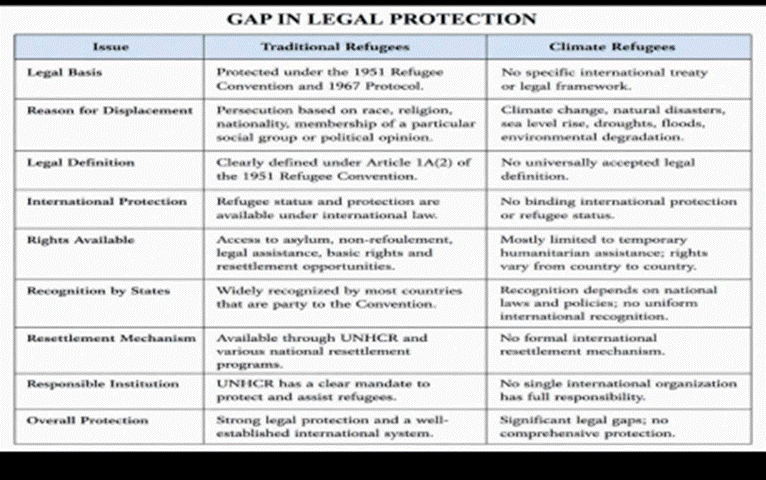
Gap in the 1951 refugee convention
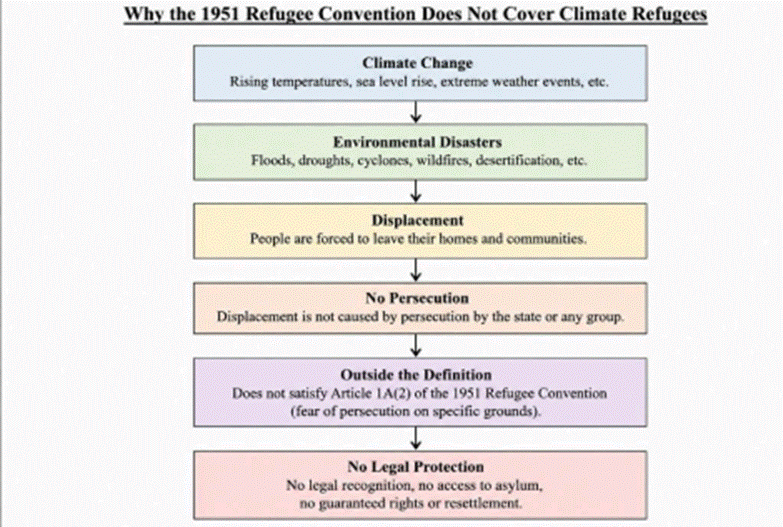
The 1951 Refugee Convention is the main international agreement that protects people who are forced to leave their country because they fear persecution. According to Article 1A(2), a refugee is someone who cannot return to their home country because they have a well-founded fear of persecution due to their race, religion, nationality, political opinion, or membership of a particular social group. Although this Convention has protected millions of people over the years, it does not recognise climate refugees. Today, many people are forced to leave their homes because of climate change. Rising sea levels, floods, cyclones, droughts, heatwaves, and other environmental disasters make it impossible for them to continue living safely in their communities. However, since these people are not escaping persecution, they do not fall within the legal definition of a refugee under the 1951 Convention. As a result, environmental disasters were not included as a reason for granting refugee status. Another important issue is that climate change does not have a human persecutor. People are displaced because of natural hazards and environmental degradation, not because a government, organisation, or individual is targeting them. Therefore, they cannot claim refugee status under the existing legal framework.
Importance of the Case
This was the first major case in which a country’s highest court legally required its government to take stronger action against climate change. It has influenced climate litigation in many countries and demonstrated that governments can be held legally responsible for inadequate climate policies.
Human rights issues
Climate displacement is not only an environmental issue but also a serious human rights concern. When people are forced to leave their homes because of floods, cyclones, droughts, rising sea levels, or other climate-related disasters, they often lose access to many basic rights that are essential for a safe and dignified life. These rights include the right to life, housing, health, livelihood, and education. Since climate refugees are not officially recognised under international refugee law, they often struggle to receive legal protection and government support, making their situation even more difficult.
The right to life is one of the most important human rights affected by climate change. Extreme weather events such as floods, storms, heatwaves, and landslides can cause injuries, deaths, and long-term insecurity. Even after the disaster ends, many displaced people continue to face unsafe living conditions due to the lack of food, clean water, healthcare, and proper shelter.
Climate displacement also affects the right to adequate housing. Natural disasters frequently destroy homes, villages, and agricultural land, forcing families to live in temporary camps or overcrowded shelters. Many people remain displaced for long periods because they cannot return to their homes or rebuild their lives.
I. Create a new legal framework
At present, international law does not clearly protect people who are forced to leave their homes because of climate change. This is why a new international legal framework is needed. The United Nations and other countries should work together to create a new convention or protocol that officially recognises climate refugees. This law should clearly explain who qualifies as a climate refugee and what rights they should receive. Such a framework would help ensure that displaced people receive protection, support, and equal treatment.
II. Expand the 1951 refugee convention
The 1951 Refugee Convention protects people who flee their countries due to war or persecution, but it does not cover those displaced by climate change. Since climate-related disasters are increasing every year, it is important to update this Convention. By expanding its definition, people forced to migrate because of floods, droughts, rising sea levels, or other environmental disasters can also receive legal protection and international assistance.
III. Strengthen regional cooperation
Many climate disasters affect neighbouring countries in similar ways. For this reason, countries within the same region should work together and create agreements to deal with climate displacement. They can share resources, provide emergency support, and help affected people find safe places to live. Regional cooperation will make disaster response faster and more effective.
IV. Planned relocation and resettlement
In some areas, climate change has made it impossible for people to continue living safely. Instead of waiting until a disaster forces them to leave, governments should prepare relocation plans in advance. People should be moved with dignity and given proper housing, education, healthcare, and employment opportunities. They should also be involved in decisions about their relocation so that their needs and opinions are respected.
V.Climate action and prevention
The best long-term solution is to reduce the impact of climate change itself. Governments should reduce greenhouse gas emissions, encourage the use of clean energy, protect forests, and promote sustainable development. If climate change is controlled, fewer people will be forced to leave their homes in the future.
Critical remark
The absence of legal recognition for climate refugees remains one of the most significant gaps in international refugee law. Although climate change is increasingly forcing people to leave their homes because of rising sea levels, floods, droughts, and other environmental disasters, such individuals are not protected under the 1951 Refugee Convention or its 1967 Protocol. As a result, they often face uncertainty regarding their legal status, access to asylum, and protection of their fundamental rights. The existing legal framework was developed before climate-induced displacement became a global concern and is therefore inadequate to address present-day realities. This legal gap highlights the urgent need for international cooperation and the development of a comprehensive legal framework that recognises climate-induced displacement while ensuring the protection of human rights, dignity, and access to effective remedies.
Conclusion
Climate change is no longer just an environmental issue; it has become a serious human rights and humanitarian challenge. Every year, millions of people are forced to leave their homes because of floods, droughts, rising sea levels, cyclones, wildfires, and other climate-related disasters. These people are commonly referred to as climate refugees or climate-displaced persons. The biggest legal problem is that the 1951 Refugee Convention does not recognize people who are displaced only because of climate change. The Convention protects those fleeing persecution based on race, religion, nationality, political opinion, or membership in a particular social group, but it does not cover environmental displacement. As a result, climate-displaced people often do not receive legal protection, asylum, or access to basic rights such as housing, healthcare, education, and employment. This legal gap leaves millions of vulnerable people without adequate protection. Therefore, the international community, governments, and human rights organizations should work together to develop a stronger legal framework that recognizes climate refugees and guarantees their rights.
