

CASE DETAILS
| Case Name | Bar of Indian Lawyers Through its President Jasbir Singh Malik v. D.K. Gandhi PS National Institute of Communicable Diseases & Anr.[1] |
| Citation | [2024] 6 S.C.R. 484 : 2024 INSC 410 |
| Equivalent Citation / Case Number | Civil Appeal No. 2646 of 2009 |
| Jurisdiction | Supreme Court of India |
| Bench | Hon’ble Ms. Justice Bela M. Trivedi and Hon’ble Mr. Justice Pankaj Mithal |
| Judgment Date | 14 May 2024 |
| Bench Strength | Division Bench (Two Judges) |
| Nature of Case | Civil Appeal |
| Relevant Sections | Section 2(1)(o), Consumer Protection Act, 1986[2]; Section 2(42), Consumer Protection Act, 2019[3]; Section 35, Advocates Act, 1961[4]; Section 138, Negotiable Instruments Act, 1881[5] |
| Principles / Rules Applied | Sui generis doctrine; Contract of Personal Service; Statutory Interpretation; Consumer Protection Jurisprudence |
INTRODUCTION
Amongst the most hotly contested fault lines of Indian consumer jurisprudence is the structural line distinguishing elite professions from common commercial marketplace activities. In a landmark ruling in Bar of Indian Lawyers v D.K. Gandhi (2024)[6], the apex court crystallized important principles on the ambit of consumer protection law. This litigation finally untangled a long-standing jurisdictional tussle on whether practicing advocates could be held liable for “deficiency in service” under the Consumer Protection Act, 1986 (now called the Consumer Protection Act, 2019)[7]. This intervention was particularly significant at a time when consumer forums were beginning to entertain complaints against lawyers[8], an inclination that would effectively commercialise the public interest function of the profession.
The decision of the Bench fundamentally restricted/expanded statutory limits of Consumer Commissions, as it ruled that work rendered by advocates who are in practice does not come within the sweep of the provisions of Consumer Protection Act. The legal profession has a sui generis character Such that, the Court stated, it cannot be evaluated through normal trade or commodity metrics. This landmark ruling upends decades of expansive judicial interpretation while also rebuilding the rules surrounding professional liability in India, establishing that matters around professional negligence are really solved in large part through the Advocates Act, 1961[9].
FACTS OF THE CASE
The dispute had a long legal journey starting from when a retail client, Mr D.K. Gandhi (the respondent) engaged a legal practitioner (the appellant) to file and prosecute his criminal complaint against the Accused for an offence under Section 138 of the Negotiable Instruments Act, 1881 in respect of the dishonour of a ₹20,000 cheque[10]. In the trial court proceeding, an amicable settlement was agreed between rival parties586490-020450230910 and a demand draft of ₹ 20,000 + crossed cheque of ₹ 5,000 to meet legal cost was sent. The respondent then stated that these financial instruments were received by the advocate but not handed over, with a cash payment of ₹ 5,000 being demanded before their handover.
The advocate responded by commencing civil proceedings to recover his unpaid fees. The respondent then moved a complaint before the District Consumer Disputes Redressal Forum, claiming damages for deficiency in service, harassment, and mental agony. Foregoing transport the counsel challenged the maintainability of the complaint itself and argued that enrolled advocates, as such, were not amenable under consumer disputes forum.
While the client won in the District Consumer Disputes Redressal Forum, this order was overturned by the State Consumer Disputes Redressal Commission which said based on Supreme Court judgements that advocates are not covered within of the Consumer Protection Act.
Nevertheless, the order of the State Commission was subsequently reversed by the National Consumer Disputes Redressal Commission (NCDRC) observing that a complaint under Section 2(1)(g)(i) would be maintainable before a consumer forum in respect of deficiency in service on the part of a professional for not maintaining requisite standard of care. Displeased with this interpretation, a batch of civil appeals were preferred before the Supreme Court of India by Bar of Indian Lawyers and Bar Council of India.
ISSUES BEFORE THE COURT
- The applicability of the operational definition of “service” which is enshrined in Section 2(1)(o) of the earlier 1986 Act or Section 2(42) of the Consumer Protection Act,2019 to cover professional activities and services carried on execution by enrolled advocates.
- Whether the agreement between legal counsel and a client shall be termed as ‘contract for services’ (independent commercial relationship) or shall be considered as “contract of personal service” so as to attract the statutory exemption under Consumer forum.
- Whether there is a necessity of a formal reassessment by a larger bench of the Supreme Court, of the three-judge bench holding in Indian Medical Association v. V.P. Shantha (1995)[11] that healthcare services were covered under the purview of consumer courts.
ARGUMENTS
Arguments on the behalf of Appellants (Bar Association)
- The Non-Commercial Nature of Law: The appellants contended that the nature of law practice is very different and should be kept completely separate from commercial retail shops, traders or physical commodity supply lines. They emphasized that lawyers are officers of the court first — as in, before any private client contract to earn money.
- The “Contract of Personal Service” Exclusion: Appellants argued that the relationship between an advocate and his client is one that depends wholly on individual trust and choice. This dynamic results in the creation of a “contract of personal service”, which has been consciously excluded from being covered under consumer court jurisdiction by the legislature vide Section 2 (42).
- Exclusivity of the Advocates Act: It was contended that parliament has overridden the Advocates Act, 1961 by enacting it as a self cancelling code for legal ethics. Providing an option of parallel liability before forums for a consumer grievance and imposing such liability on State Bar Council is a result of internal violation.
Arguments on behalf of Respondent (D.K. Gandhi)
- The Broad Scope of Consumer Protection Relief: The respondent stated that consumer law is a remedial, social welfare statute designed to shield purchasers in any sector. They claimed service is defined purposefully broadly to include all compensated work, with only public office or volunteer labor falling outside of it.
- Absence of Strict Immunity: The respondent claimed that “once a customer engages to pay his professional services they are with him in a paid commercial relationship. They argued that experienced experts must not be granted absolute immunity when their actions lead to direct financial harm or harm; others, an argument established in case law.
- Healthcare cases provide for similar discussion: The V.P. Shantha judgement was urged upon by the respondent before this Court which holds that: If a medical practitioner can be held to be liable as a consumer on account of negligence, there is then no reason in waiving the liability if legal practitioners do not perform their duty.
JUDGEMENT/HOLDING
The Supreme Court also allowed the civil appeals and overturned the earlier order of NCDRC. The Division Bench reached the following conclusions:
- Exclusion from the Consumer Act: The Bench also held that ‘no one can be excluded from Consumer Jurisdiction with regard to legal practice, as it has a different structure of institutions than a typical retail business.’ As a result, that rendered by an Advocate does not fall within the definition of “services” under the Consumer Protection Act.
- Classification of the Contract: The Bench determined that the hire of an advocate by a client represents a contract of personal service. Because the client exercises high personal control over selecting and instructing counsel, this relationship falls within the explicit exclusionary clause of Section 2(42) of the Act.
- Examining the Past Systems of Medical Negligence: The Division Bench expressed doubts regarding correctness of the 1995 decision in V.P. Shantha v. Realising the limit on their number of benches, they referred that landmark ruling to the Chief Justice of India (CJI) for a larger bench to determine if healthcare should similarly be excluded from consumer court’s jurisdiction.
RATIO DECIDENDI
The Supreme Court adopted a purposive interpretation of the Consumer Protection Act, 1986 and the Consumer Protection Act, 2019 while determining whether legal services rendered by advocates fall within the statutory meaning of “service”. The Court held that the advocate-client relationship cannot be equated with an ordinary commercial transaction because an advocate performs a public function as an officer of the court and owes an overriding duty to the administration of justice, which may, in appropriate cases, prevail over the interests of the client[12].
The Court further reasoned that the relationship between an advocate and a client is founded upon confidence, professional independence, personal choice, and confidentiality. Owing to these distinctive characteristics, the engagement of an advocate was held to constitute a contract of personal service, thereby attracting the statutory exclusion contained in the Consumer Protection Act and placing such services beyond the jurisdiction of consumer fora[13].
Accordingly, the binding principle emerging from the judgment is that complaints alleging deficiency in professional legal services cannot be adjudicated by consumer forums. Such grievances must instead be addressed through the disciplinary mechanism established under the Advocates Act, 1961, which Parliament has enacted as the exclusive statutory framework governing the professional conduct and accountability of advocates[14]
CRITICAL ANALYSIS AND OBSERVATIONS
Regulatory Shift: Protection to Immunity
My Comment: Change Of Course on Indian Consumer Law in Bar of Indian Lawyers v. D.K. Gandhi Indian courts for almost three decades had incrementally expanded the consumer court territory to encompass professional domains; as long as a fee was paid, they said, actionable consumer rights arose. By encasing legal practitioners in an immunity buffer, this judgment interrupts that trend. The aim of the new law to protect attorneys from frivolous suits is laudable in spirit, but it deprives clients of a speedy, low-cost summary remedy for breach of contract and puts them into time-consuming civil court proceedings.
The most compelling aspect of the judgment is acknowledging that advocates are independent and serve as officers of the court while preserving the disciplinary mechanism provided under the Advocates Act, 1961. But by cutting advocates out of the consumer jurisdiction altogether, the Court severely restricts the remedies for loss suffered by clients who suffer real pecuniary detriment through professional negligence.
Understanding the “Contract of Personal Service” as a Drafting Complication
The legal logic of the Court works only to the extent that we frame an advocate’s job as really a contract of personal service. In labour law, a contract of personal service is typically understood to mean one where the master/director strictly dictates precisely how the performance of work will be completed. Understanding this in the context of traditional Indian law requires an analysis of legal tests traditionally employed to distinguish between these contracts, and how courts balance the professional independence of lawyers against client instructions[15].
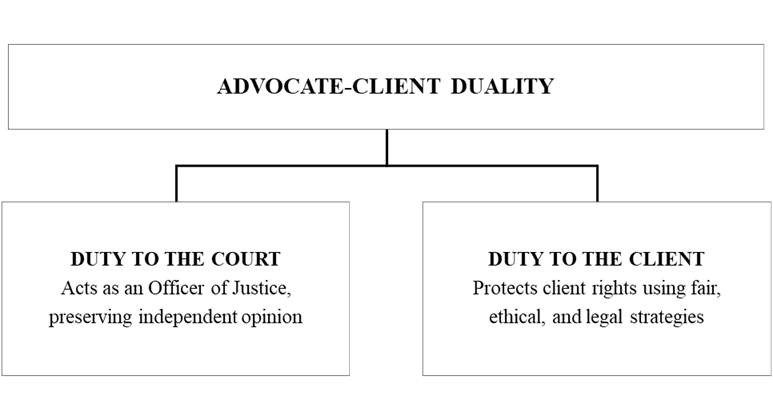
As the diagram illustrates, a criminal justice attorney, for instance, has a duty to the court because they are an officer of the court—they require autonomy in how to approach legal arguments and they cannot be told by their client what to do. The court is careful to name the relationship a personal service contract in order to bring it out of the CPA, which creates an apparent conflict with traditional theories of employment law which may make more difficult future interpretation of professional contracts. That part of the ruling will probably head-academics dissecting because the rigid distinction between a ‘contract of service’ and a contract for services, does not fit tightly enough within the advocate-client framework in this context.
Examining the Reference on Medical Liability
The Court’s unsetting of V.P. Shantha and its implication that doctors should also be excluded from consumer court rules have profound implications on public accountability of healthcare services. The V.P. Shantha ruling was a crucial consumer-driven success that held health care providers accountable for misdeed through well-defined regulations as opposed to the broad standard of professional safety practices[16]. Reading this Order in conjunction with recent week-on-week empirical numbers regarding lawyer liability cases, the only way to fully appreciate the wider implications of this move is by understanding how underlying trends in Article 19(2)[17] trim back commercial litigation speech[18]
The reservation in the reference, though, does not overrule V.P. Shantha on its own but raises issues about the future ambit of consumer law protections. If a larger Bench eventually chooses to exclude medical professionals from being included in the purview of consumer protection law, it may dramatically change the balance between professional autonomy and consumer rights.’ As such, beyond just the legal profession, this judgment could have long-term implications – indeed wider regulatory accountability on other professions as well.
CONCLUSION
In the context of common retail businesses, which is clearly delineated by the Supreme Court in Bar of Indian Lawyers v. D.K. Gandhi, it protects the legal system from a torrent of tactical consumer complaints by confirming that advocate-client relationships are not included in the definition of services provided under consumer law. It however, says that a professional discipline should be dealt by the specialized bodies where specific proactive actions can be taken by the Bar Councils established and governed under U.P. Advocates Act, 1961 instead of a generic consumer tribunal[19].
Legally, the order moves India closer to a clearer understanding of what falls under Consumer forums and underlines why legal services are covered by the law[20].At the same time as this, it restricts the remedies available to clients who seek compensation for professional negligence therefore raising important access to justice issues.
This also exposes the need for Bar Councils to upgrade their disciplinary systems so that client complaints are addressed. Even as the future of professional practice shifts, by force or dynamics, in both variations retaining fidelity to professional independence and equally providing access to real justice for all clients will be an enduring challenge for Indian professionalism oversight as noted in the procedural orders of the apex court thereafter. The importance of the judgment in the long run would depend upon the degree to which Bar Councils are able to perform their disciplinary functions and on how matters relating to Indian Medical Association v. V.P. Shantha are dealt by a larger Bench[21]
Author: Anuradha Yadav
Year of Study: Fourth Year B.A. LL.B.
College: C.M.P. Degree College, University of Allahabad
REFERENCES
[1] Bar of Indian Lawyers Through its President Jasbir Singh Malik v D.K. Gandhi PS National Institute of Communicable Diseases and Another [2024] 6 SCR 484, 2024 INSC 410 <https://indiankanoon.org/doc/140245685/> accessed 30 June 2026
[2] Consumer Protection Act 1986, s 2(1)(o)
[3] Consumer Protection Act 2019, s 2(42)
[4] Advocates Act 1961, s 35 <https://www.indiacode.nic.in/handle/123456789/1535> accessed 3 July 2026
[5] Negotiable Instruments Act 1881, s 138
[6] Bar of Indian Lawyers Through its President Jasbir Singh Malik v D.K. Gandhi PS National Institute of Communicable Diseases and Anr [2024] 6 SCR 484, 2024 INSC 410 <https://indiankanoon.org/doc/140245685/> accessed 30 June 2026
[7] Consumer Protection Act 2019, s 2(42)
[8] Central Consumer Protection Authority, Annual Report on Consumer Grievance Redressal Trends 2023-2024, Ministry of Consumer Affairs, Food and Public Distribution (Government of India, 2024) 45–48 <consumeraffairs.gov.in> Accessed 30 June 2026
[9] Advocates Act 1961, s 35 <barcouncilofindia.org> accessed 30 June 2026
[10] Negotiable Instruments Act 1881, s 138 <indiacode.nic.in> accessed 30 June 2026
[11] Indian Medical Association v V.P. Shantha and Ors (1995) 6 SCC 651 <https://indiankanoon.org/doc/723973/>accessed 30
June 2026
[12] Supreme Court of India, ‘Record of Proceedings: Civil Appeal No 2646/2009’ (7 November 2024) <indiankanoon.org> accessed 30 June 2026
[13] Consumer Protection Act 2019, s 2(42); Bar of Indian Lawyers Through its President Jasbir Singh Malik v D.K. Gandhi PS National Institute of Communicable Diseases and Another [2024] 6 SCR 484, 2024 INSC 410 <https://indiankanoon.org/doc/140245685/> accessed 30 June 2026
[14] Advocates Act 1961, s 35 <https://www.indiacode.nic.in/handle/123456789/1535> accessed 30 June 2026; Bar of Indian Lawyers Through its President Jasbir Singh Malik v D.K. Gandhi PS National Institute of Communicable Diseases and Another [2024] 6 SCR 484, 2024 INSC 410 <https://indiankanoon.org/doc/140245685/> accessed 30 June 2026
[15] Dharangadhra Chemical Works Ltd v State of Saurashtra AIR [1957] SC 264 <https://indiankanoon.org/doc/1572911/> accessed 30 June 2026
[16] Jacob Mathew v State of Punjab (2005) 6 SCC 1 <sci.gov.in> accessed 30 June 2026
[17] Tata Press Ltd v Mahanagar Telephone Nigam Ltd (1995) 5 SCC 139 <https://indiankanoon.org/doc/1146231/> accessed 30 June 2026
[18] Jeet Singh Mann, ‘Revisiting the DK Gandhi SC Judgment 2024 on the Liability of Advocates Under the Consumer Protection Law’ (2026) 13(1) International Journal on Consumer Law and Practice 42 <nls.ac.in> accessed 30 June 2026
[19] Advocates Act 1961, s 35 <https://www.indiacode.nic.in/handle/123456789/1535> accessed 30 June 2026
[20] Consumer Protection Act 2019, s 2(42); Bar of Indian Lawyers Through its President Jasbir Singh Malik v D.K. Gandhi PS National Institute of Communicable Diseases and Another [2024] 6 SCR 484, 2024 INSC 410 <https://indiankanoon.org/doc/140245685/> accessed 30 June 2026
[21] Indian Medical Association v V.P. Shantha (1995) 6 SCC 651; Bar of Indian Lawyers Through its President Jasbir Singh Malik v D.K. Gandhi PS National Institute of Communicable <https://indiankanoon.org/doc/723973/>accessed 30
June 2026
